Bangladesh.. Warning of Dengue Fever Escalation in October Due to Weather
Bangladesh entered October amidst a worsening outbreak of dengue fever, after September recorded the deadliest month for the disease this year, while experts warned that weather conditions could lead to further spread of the infection, increasing pressure on hospitals that are already struggling with the worst measles outbreak in the world.
Ofoq News
·4 minutes read
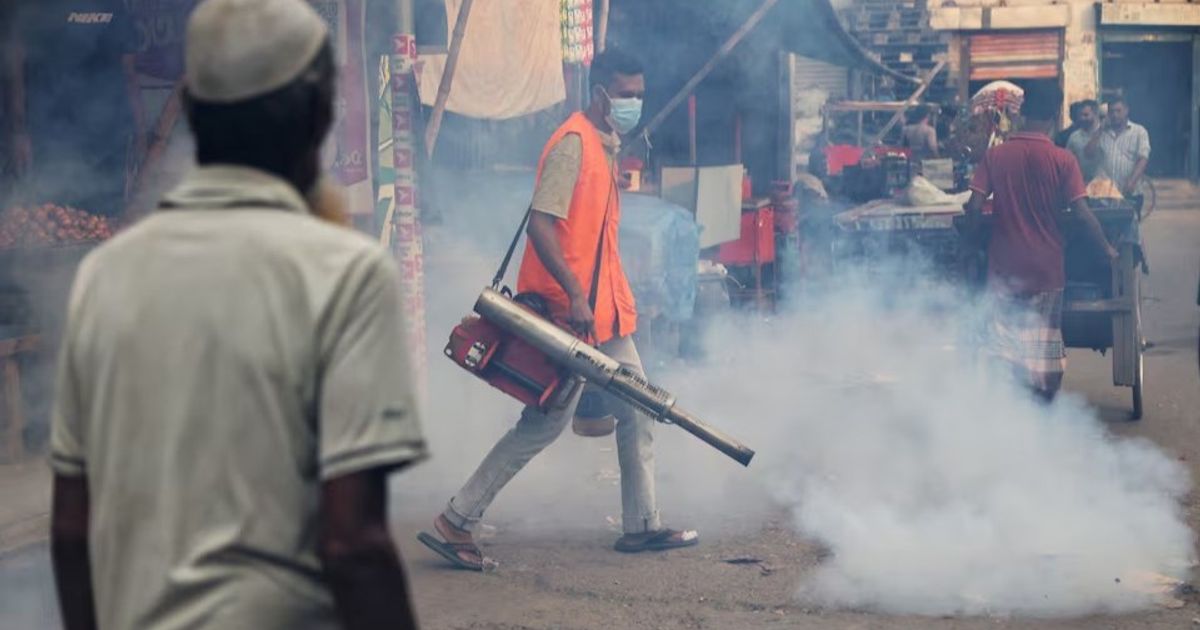
Bangladesh entered October amid a worsening dengue fever outbreak, after September recorded the deadliest month for the disease this year, while experts warned that weather conditions could lead to further spread of the infection, increasing pressure on hospitals already struggling with the worst measles outbreak in the world.
The return of the dengue fever outbreak, which includes symptoms such as fever and muscle and joint pain, follows the worst outbreak of the disease in Bangladesh in 2023, adding pressure to a healthcare system that has seen measles claim the lives of more than 1,100 children this year.
A police officer named Shafiq Islam, 30 years old, who was discharged from the hospital this week after receiving a blood transfusion, said: "I was lucky to get a bed, but many dengue patients are still struggling to get a bed like mine."
Health experts warned that Bangladesh could face a sharp increase in dengue cases over the next two months due to the humid weather.
He added: "Many of my colleagues have also contracted the infection. We spend our days serving the public, but we often neglect our health."
Experts have stated that the recent rains and changes in weather patterns may help continue the spread of dengue fever during October, which is traditionally one of the peak months for the disease.
Medical entomologist Kabeerul Bashar from Jahangirnagar University said, "Our prediction model indicates that the situation of dengue fever will worsen further in October," calling for the implementation of measures targeting mosquito control and tightening preventive measures at the household level.
Bashar noted that the spread of the Aedes mosquito, which transmits dengue fever, outside major cities has turned the disease into a nationwide challenge, warning that spraying pesticides alone will not be sufficient unless breeding sites for mosquitoes are eliminated.
He added that the rains in September may continue to drive up infections during October, due to a time gap of 45 to 60 days between rainfall and the transmission of dengue fever.
The Ministry of Health in Bangladesh reported that at least 245 people have died, while 79,620 dengue patients have been hospitalized since January, with the death toll in September rising to 148, compared to 43 deaths in August and 36 in July.
On Wednesday, 6 more people died, while 1948 new injured individuals were admitted to hospitals, and 5485 people are receiving treatment across the country.
There is no specific treatment for the disease, as doctors recommend rest, fluid intake, and pain relievers such as "paracetamol," while severe cases require monitoring in the hospital to avoid complications.
Climate change also increases uncertainty regarding the transmission patterns of dengue fever. A study focused on Bangladesh and covering 22 years up to 2022 found a close correlation between temperatures and rainfall in the previous months and the transmission of dengue fever.
Researchers stated that changing weather patterns could affect both mosquito populations and disease transmission.
Bashar explained that changes in rainfall patterns and humidity lead to alterations in the seasonal behavior of the "Aedes" mosquito, keeping it active for longer periods and extending its breeding periods.
These results are consistent with the conclusions of the World Health Organization.
Public health specialists stated that prevention should not be limited to government campaigns, noting that eliminating stagnant water is one of the best ways to combat mosquito breeding, which remains a concern in many neighborhoods, according to residents, despite control efforts.
Zahid Hassan, 32, whose 4-year-old son recently recovered from dengue fever but himself contracted the fever, said: "There are a lot of mosquitoes in our area, but we haven't seen any initiative to combat or eliminate them."
Mahmoud Rahman, the former director of the Institute of Epidemiology, Disease Control, and Research, said that prevention is essential to alleviate pressure on hospitals struggling with multiple outbreaks.
He added: "The health system has a limited capacity to deal with simultaneous outbreaks. Preventing infections by reducing mosquito breeding is critically important."
Government data showed that 21,520 confirmed cases of measles have been recorded since March 15, with more than 190,000 people seeking medical care due to suspected measles infection or similar symptoms.
Source: Ofoq News
Suggested
Read also
 Politics
Tripartite Meeting Between Egypt, Chad, and Libya Discusses Security in the Sahel and Sahara Region
 Politics
United States.. Woman Arrested on Suspicion of "Espionage for China"
 Politics