"KAUST" and "Oxford" Develop a Sensor to Detect Parkinson's Disease with 90.9% Accuracy
Researchers at King Abdullah University of Science and Technology (KAUST) in Saudi Arabia, in collaboration with the University of Oxford in the UK, have developed a highly sensitive electronic sensor to detect molecular signatures associated with Parkinson's disease in blood samples.
Ofoq News
·4 minutes read
Researchers at King Abdullah University of Science and Technology (KAUST) in Saudi Arabia, in collaboration with the University of Oxford in the UK, have developed a highly sensitive electronic sensor to detect molecular signatures associated with Parkinson's disease in blood samples.
The technology achieved an accuracy of 90.9% in distinguishing between molecular patterns associated with the disease and those found in healthy individuals, in a preliminary study involving 59 participants.
The study published in the journal "Science Advances" reported that the sensor developed at KAUST can simultaneously detect three different forms of the protein (α-synuclein), which is closely linked to Parkinson's disease, and measure them at extremely low concentrations that are difficult to assess using traditional analytical techniques.
Professor Shahika Inal, an associate professor of bioengineering at KAUST, stated: "Changes associated with Parkinson's disease may begin long before it is clinically diagnosed, and while blood samples are easy to obtain, detecting these changes through them remains a significant challenge."
She added: "The technology we developed allows us to monitor several forms of alpha-synuclein protein simultaneously, even when their concentrations in the blood are extremely low. These preliminary results are encouraging, and our next step is to validate the technology's performance in a much larger number of patients."
Parkinson's disease causes damage to dopamine-producing nerve cells, leading to movement and balance disorders, as well as other functions in the body.
Currently, the diagnosis of the disease largely relies on clinical evaluation and is often diagnosed after the appearance of its characteristic motor symptoms. Monitoring the proteins associated with the disease, which originate from the brain, may allow for earlier identification.
However, measuring these proteins in the blood poses a significant challenge; over 95% of the "alpha-synuclein" protein found in the bloodstream comes from red blood cells, creating noise that complicates the distinction of the targeted signals.
Researchers from King Abdullah University of Science and Technology (KAUST) in Saudi Arabia have successfully developed a flexible, highly sensitive detector that produces high-quality images with lower doses of radiation.
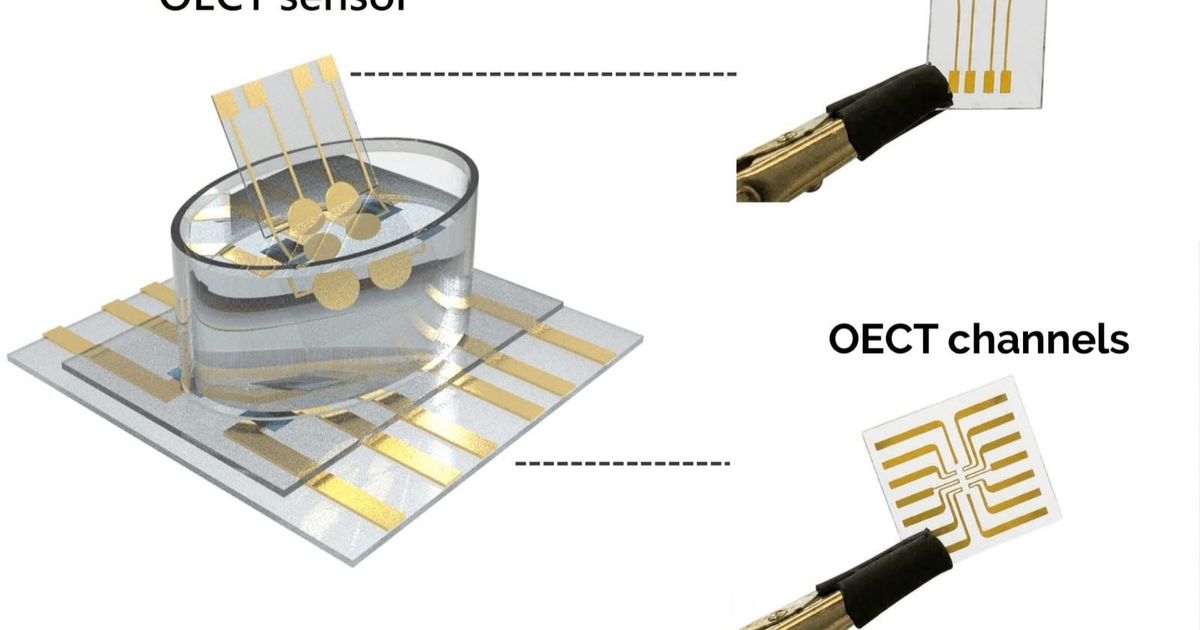
To detect the proteins coming from nerve cells, the new method begins by isolating tiny vesicles released by these cells into the bloodstream, and then analyzing their protein contents using an electronic sensor.
The technology is based on a "transistor" that converts extremely weak biological signals into much stronger electronic signals, allowing for the measurement of the three forms of the "alpha-synuclein" protein within 40 minutes.
The evaluation was conducted on samples from participants in the "Oxford Discovery" research group, without the analysts being informed of the health status of the sample owners.
The study included individuals diagnosed with Parkinson's disease, healthy individuals who formed a comparison group, and others suffering from "isolated REM sleep behavior disorder" (iRBD), a disorder associated with an increased likelihood of developing Parkinson's or related neurological disorders.
Researchers observed differences between the groups in the patterns of the various forms of the "alpha-synuclein" protein, suggesting that measuring these forms collectively may provide more useful diagnostic information compared to relying on a single indicator.
The first clinical results on humans for an experimental cell therapy for Parkinson's disease showed that transplanting dopamine-producing nerve cells derived from stem cells into the brain is possible and initially safe.
In the Kingdom of Saudi Arabia, the healthcare system is increasingly focusing on prevention and early detection, coinciding with the rise in life expectancy, which has reached 79.7 years, approaching the target of "Saudi Vision 2030" of 80 years.
With the expectation of a significant increase in the elderly population over the coming decades, the importance of technologies that could contribute in the future to the early detection of age-related diseases, such as Parkinson's, may grow to meet long-term healthcare needs.
Despite the encouraging preliminary results, researchers emphasize that the technology is not yet ready to be relied upon solely as a blood test for diagnosis; the current study was limited to a retrospective assessment of an initial group of participants.
Transitioning to routine clinical use requires larger-scale studies in multiple centers that follow participants over time to verify the technology's ability to predict disease in the long term.
Source: Ofoq News
Suggested
Read also
 Politics
Tripartite Meeting Between Egypt, Chad, and Libya Discusses Security in the Sahel and Sahara Region
 Politics
United States.. Woman Arrested on Suspicion of "Espionage for China"
 Politics