The Alamein Summit Confirms Red Sea Security and Rejects Unilateral Measures in the Nile River
Egyptian President Abdel Fattah El-Sisi hosted a quadripartite consultative summit on Sunday in the new Alamein city, with the participation of Eritrean President Isaias Afwerki, Somali President Hassan Sheikh Mohamud, and Sudan's Transitional Sovereignty Council Chairman Abdel Fattah Al-Burhan, focusing on developments in the Horn of Africa and the Red Sea, and coordination on regional issues.
Ofoq News
·6 minutes read
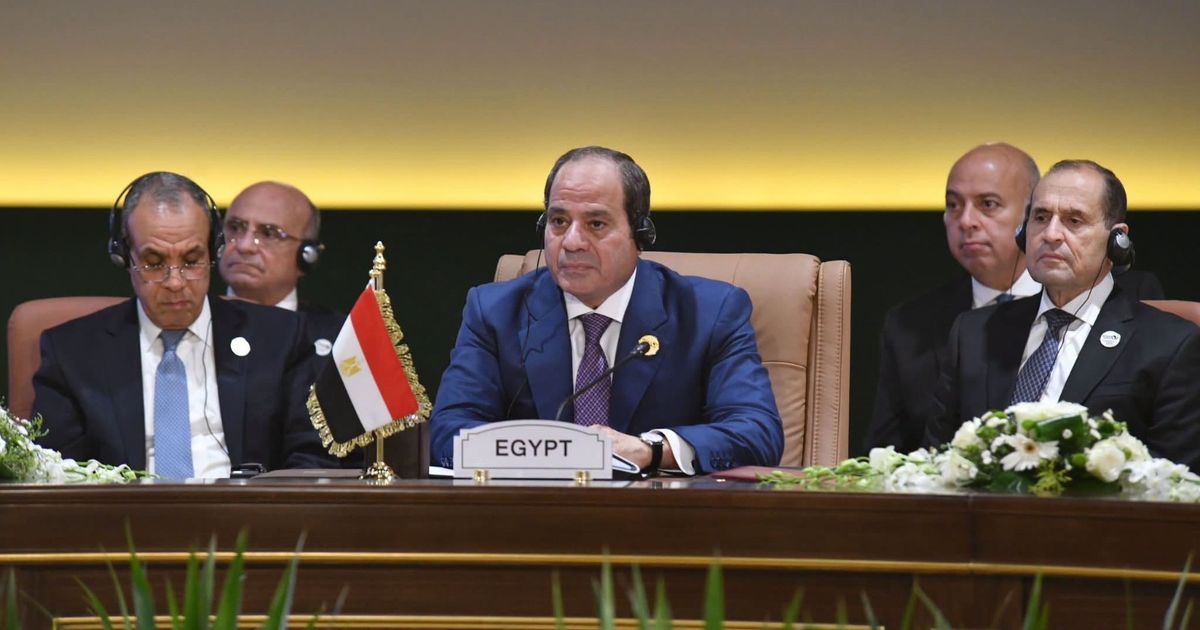
Egyptian President Abdel Fattah El-Sisi hosted a quadripartite consultative summit on Sunday in New Alamein City, with the participation of Eritrean President Isaias Afwerki, Somali President Hassan Sheikh Mohamud, and Sudan's Transitional Sovereignty Council Chairman Abdel Fattah Al-Burhan. The summit focused on developments in the Horn of Africa and the Red Sea, and coordination on regional issues, with the leaders affirming their rejection of any "unilateral actions" that harm the water uses of the Nile Basin countries.
The Egyptian presidency stated in a statement that the summit discussed ways to enhance coordination and cooperation among the four countries, in addition to developments in the Horn of Africa and the Red Sea, and updates on African and regional issues of common interest.
The leaders emphasized, according to the statement, the necessity of continuing coordination and consultation to face regional challenges, respecting the sovereignty of states, their unity, and territorial integrity, supporting their national institutions, rejecting interference in their internal affairs, and resolving disputes through peaceful means.
The meeting resulted in the "Joint Alamein Declaration," which included the main positions of the four countries regarding regional security, water issues, the Red Sea, and economic cooperation.
Egyptian presidential spokesman Mohamed El-Shenawy stated that El-Sisi reviewed during the summit the efforts made by Cairo to reach a ceasefire and comprehensive political settlements for regional crises, contributing to the return of security and stability and reconstruction.
The Egyptian president warned, according to the statement, of the dangers of external interventions that contribute to prolonging conflicts and exacerbating humanitarian suffering, emphasizing the rejection of any attempts to undermine the unity of nations.
Sisi considered that such attempts represent a violation of international law, the United Nations Charter, and the founding law of the African Union, affirming Egypt's continued support for national institutions and its contribution to enhancing their capabilities to face security and developmental challenges, particularly "terrorism and extremism."
The leaders also discussed the situation in the Horn of Africa, emphasizing the importance of enhancing coordination to address common challenges and maintain regional security and stability, as well as promoting development and economic integration opportunities among the countries in the region.
They also stressed the commitment to the rules of international law, the principles of good neighborliness, and non-interference in the internal affairs of states.
The issue of Nile waters was also addressed at the summit, where the leaders emphasized the importance of respecting international law governing transboundary rivers, including the Nile River.
Participants confirmed, according to the Egyptian presidency, the principles of "not causing harm" and cooperation through prior notification, consultation, and consensus with the downstream countries, declaring "complete rejection of any unilateral actions that harm the existing water uses of the two downstream countries of the Nile River," referring to Egypt and Sudan.
The inclusion of the Nile issue in the summit's agenda, which includes Egypt, Sudan, Eritrea, and Somalia, reflects the expansion of consultations among the four countries to include water security issues alongside the political and security crises facing the Horn of Africa region.
In another file directly related to the security of the Horn of Africa countries, the leaders emphasized the "necessity of ensuring the security and stability of the Red Sea," as well as the freedom and safety of international navigation in the Gulf of Aden and the Bab el-Mandeb Strait, according to the Egyptian presidency's statement.
This position places the security of maritime corridors among the priorities of coordination between the four countries, as Egypt, Sudan, and Eritrea overlook the Red Sea, while Somalia has a long coastline along the Gulf of Aden and the Indian Ocean.
The focus on the security of the Red Sea came within broader discussions about the challenges facing the Horn of Africa, as the leaders stressed the need to intensify consultations to maintain regional stability and enhance integration opportunities among the countries in the region.
The summit emphasized the importance of maintaining the unity of countries and their national institutions and rejecting interference in their internal affairs, alongside the call for resolving disputes through peaceful means.
According to the Egyptian presidency's statement, Cairo renewed its commitment to supporting national institutions and enhancing their capabilities in facing security and developmental challenges.
This position links the issues discussed at the summit in the Horn of Africa with the broader crises in the region, as the presidency's statement repeatedly focused on the concepts of state sovereignty, territorial integrity, and non-interference in internal affairs.
According to the statement, Afwerki, Hassan Sheikh Mohamud, and Al-Burhan expressed their appreciation for President Sisi's initiative to hold the summit, affirming the importance of relations with Egypt, and praised what they described as Egypt's supportive role for stability and development in Africa and Cairo's policy of promoting African solidarity, dialogue, and peaceful resolution of disputes.
In addition to political and security issues, the leaders discussed ongoing projects being implemented within the framework of economic and developmental cooperation between Egypt, Eritrea, Somalia, and Sudan.
The participants discussed ways to enhance regional connectivity and integration in the sectors of infrastructure, energy, and trade, to support development and stability in the four countries.
The summit concluded with the issuance of the "Common Alamein Declaration," in a step that reflects the four countries' efforts to provide a political framework for coordination on issues related to the Horn of Africa, the Red Sea, and water security, in addition to enhancing economic and developmental cooperation.
1- Based on the invitation extended by His Excellency President Abdel Fattah El-Sisi, President of the Arab Republic of Egypt, to His Excellency President Isaias Afwerki, President of the State of Eritrea, His Excellency President Hassan Sheikh Mohamud, President of the Federal Republic of Somalia, and Lieutenant General Abdel Fattah Al-Burhan, President of the Transitional Sovereignty Council of the Republic of Sudan; the esteemed presidents met in a quadripartite summit today, October 4, 2026, in the New Alamein City, where they held intensive brotherly consultations regarding current regional and international issues and ways to enhance political, trade, and economic cooperation among the four countries, as well as to strengthen consultation and coordination among them.
2- The summit addressed the necessity of adhering to the principles and fundamental pillars of international law as the foundation for regional stability and cooperation, particularly respecting the sovereignty, independence, and territorial integrity of the countries in the region, promoting the values of good neighborliness, rejecting interventions in the internal affairs of the countries in the region under any pretext, and working to support national institutions and enhance political and peaceful solutions to conflicts.
3- The discussion included coordinating joint efforts to achieve regional stability, creating a conducive environment for joint and sustainable development, and elevating economic, trade, and cultural relations, in a way that helps achieve economic integration and sustainable development, and strengthen the ties between the peoples of all participating countries, taking into account the unity of goals and shared destiny.
4- The summit addressed and agreed upon the visions of the participating leaders regarding the following issues:
A- Supporting the unity of the Republic of Sudan, its sovereignty, territorial integrity, and national institutions, rejecting the establishment of any parallel entities, encouraging the resumption of the political process with Sudanese ownership and leadership, and supporting national institutions, in addition to the complete rejection of any support for mercenaries.
B- Supporting the unity and sovereignty of the Federal Republic of Somalia, rejecting any intervention or actions targeting its territorial integrity and national sovereignty, as well as rejecting any recognition or support for what is called Somaliland, considering that such actions undermine the sovereignty of the Federal Republic of Somalia and its territorial integrity.
C- Supporting the efforts of the Federal Republic of Somalia in combating terrorism, enabling state institutions to assert control over its entire territory, and calling on regional and international partners to provide sufficient, sustainable, and predictable funding for the African Union Mission in Support of Stability in Somalia (AUSSOM), which supports the security transition process in Somalia and enables the mission to carry out its mandate in support of the organized transfer of security responsibilities to Somali forces.
D- Emphasizing the principle of freedom of navigation and that the governance of the Red Sea is the exclusive responsibility of the coastal states.
H- Emphasizing the importance of respecting international law in transboundary rivers, including the Nile River, especially the principle of no harm, and the necessity of cooperation through prior notification, consultation, and consensus, and the complete rejection of any unilateral actions that harm the existing water uses of the Nile River's riparian states.
Z- Continuing to further enhance consultation and coordination among the four countries and other sister African countries.
5- The leaders agreed to establish a mechanism to follow up on the outcomes of this consultative summit, which will be held periodically and whenever necessary to enhance consultation and coordination among them.
6- The Presidents of Eritrea, Sudan, and Somalia expressed their sincere gratitude and appreciation for hosting this consultative summit.
Source: Ofoq News
Suggested
Read also
 Politics
Tripartite Meeting Between Egypt, Chad, and Libya Discusses Security in the Sahel and Sahara Region
 Politics
United States.. Woman Arrested on Suspicion of "Espionage for China"
 Politics