Experimental Immunotherapy Achieves Promising Results for Patients with Stiff Person Syndrome
The American company (Kyverna Therapeutics) has developed an experimental treatment that has shown significant benefits for patients suffering from severe autoimmune diseases affecting the nerves and muscles.
Ofoq News
·4 minutes read
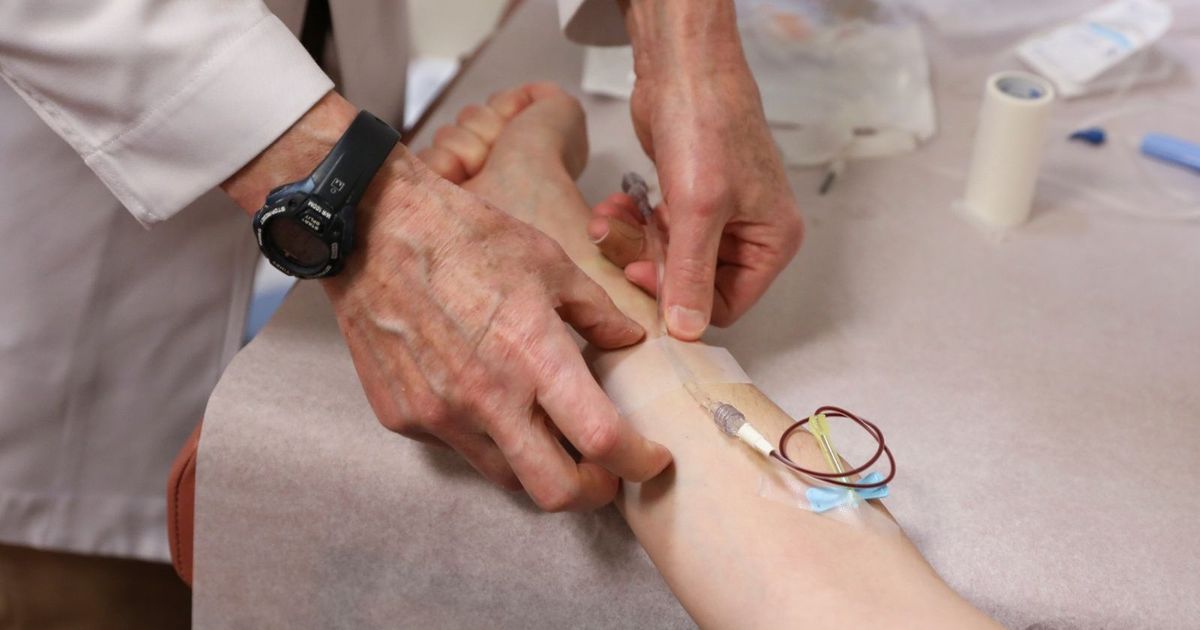
The American company (Kyverna Therapeutics) has developed an experimental treatment that has shown significant benefits for patients suffering from severe autoimmune diseases affecting the nerves and muscles.
The company stated that its experimental product, a treatment using T-cells modified with chimeric antigen receptors, known as Mivocabtagene autoleucel, led to a significant improvement in walking ability and other disease indicators in a late-stage clinical trial for patients with Stiff Person Syndrome, with benefits lasting for a year after treatment.
Dr. Amanda Beech, the study team leader and a professor of neurology and director of the neuroimmunology program at the University of Colorado Anschutz Medical Campus in the United States, stated that the results of the new trial are "compelling, especially given the severe burden of Stiff Person Syndrome and the lack of an approved treatment for it."
She added in a statement: "The continued improvement observed in movement and stiffness, along with other disease-specific indicators, alongside a good level of tolerability, confirms the experimental treatment's ability to provide significant and long-lasting benefits for patients with Stiff Person Syndrome."
Singer Celine Dion announced on her Instagram account that she is suffering from a "very rare neurological syndrome," which has forced her to postpone concerts once again.
Stiff-person syndrome is a rare and progressive neurological disorder of autoimmune origin, characterized by muscle stiffness and painful muscle spasms that affect movement and walking.
Stiffness, rigidity, and spasms in the trunk, arms, and legs can lead to advanced disability, with up to 80% of patients losing the ability to move and requiring assistive devices for walking or wheelchairs.
The syndrome is also characterized by increased sensitivity to sounds, touch, and emotional stimuli, which may trigger muscle spasms.
Currently, there is no FDA-approved treatment for stiff-person syndrome, and current treatment options include medications to alleviate symptoms and immunotherapies used off-label, such as intravenous immunoglobulin, rituximab, and plasmapheresis, along with supportive care, physical therapy, speech therapy, occupational therapy, and psychological therapy. However, the majority of patients do not respond adequately to these options or do not respond at all.
The company expects to present detailed data from the trial during the joint meeting of the American and European committees for the treatment and research of multiple sclerosis, scheduled to be held this month in Toronto.
The singer Celine Dion previously announced in 2022 that she was diagnosed with the disease.
The treatment using modified T cells with chimeric antigen receptors relies on extracting those cells from the patient's immune system, then modifying and multiplying them in the laboratory to direct them to attack a specific disease or condition before reinjecting them into the patient's body.
The first types of this treatment were designed to treat blood cancers.
In the case of "Mif-Cel", the cells were designed to target the CD19 protein found on B cells, with the addition of a co-stimulatory mechanism based on CD28.
The company explained that the treatment was designed to induce a deep depletion of B cells and reset the immune system, which may allow for sustained disease remission through a single dose, but it is still under study and has not received regulatory approval for treating stiff person syndrome.
The company intends to include first-year data in a biological license application submitted in phases to the U.S. Food and Drug Administration. It stated that the application is scheduled to be completed in the fourth quarter of 2026.
Researchers at Northwestern University in the U.S. have developed a model described as the most advanced to date for simulating human spinal cord injuries using lab-grown organoids.
In a separate study for a mid-stage clinical trial involving patients with generalized myasthenia gravis, researchers reported during the annual meeting of the American Academy of Neurology and Electromyography in Orlando, United States, that the drug "Mef-Sel" achieved a significant improvement in symptoms and patients' ability to perform daily activities.
Myasthenia gravis is an autoimmune neuromuscular disease mediated by B cells and antibodies, causing muscle weakness and fatigue. Patients may experience difficulty speaking, chewing, swallowing, or breathing.
This phase included 7 patients, all of whom achieved clinically significant improvement in the myasthenia gravis daily activities scale and the quantitative myasthenia gravis assessment after 24 weeks of treatment.
This improvement continued for a year or more in all five patients who reached this follow-up period, and 57% of the patients still experienced very low levels of symptoms at the last follow-up.
All seven patients remained off immunotherapy for myasthenia gravis after 24 weeks, while 6 of them, or 86%, remained off immunosuppressive treatment at the last follow-up.
The researchers stated that an advanced trial of the drug "Mef-Sil" on patients with myasthenia gravis is still ongoing, and participant enrollment is expected to be completed by mid-2027.
The third phase aims to compare the treatment, which is given as a single dose, with standard treatment in about 60 patients, with the primary outcomes including the assessment of the ability to perform daily activities and muscle strength.
Source: Ofoq News
Suggested
Read also
 Politics
Tripartite Meeting Between Egypt, Chad, and Libya Discusses Security in the Sahel and Sahara Region
 Politics
United States.. Woman Arrested on Suspicion of "Espionage for China"
 Politics