International Organizations: The World Needs to Increase Renewable Energy by More than 200%
A report issued by organizations concerned with renewable energy on Monday stated that the world needs to increase the deployment of renewable energy by more than 200% to meet a climate commitment by 2030, despite the sector recording an unprecedented level last year.
Ofoq News
·3 minutes read
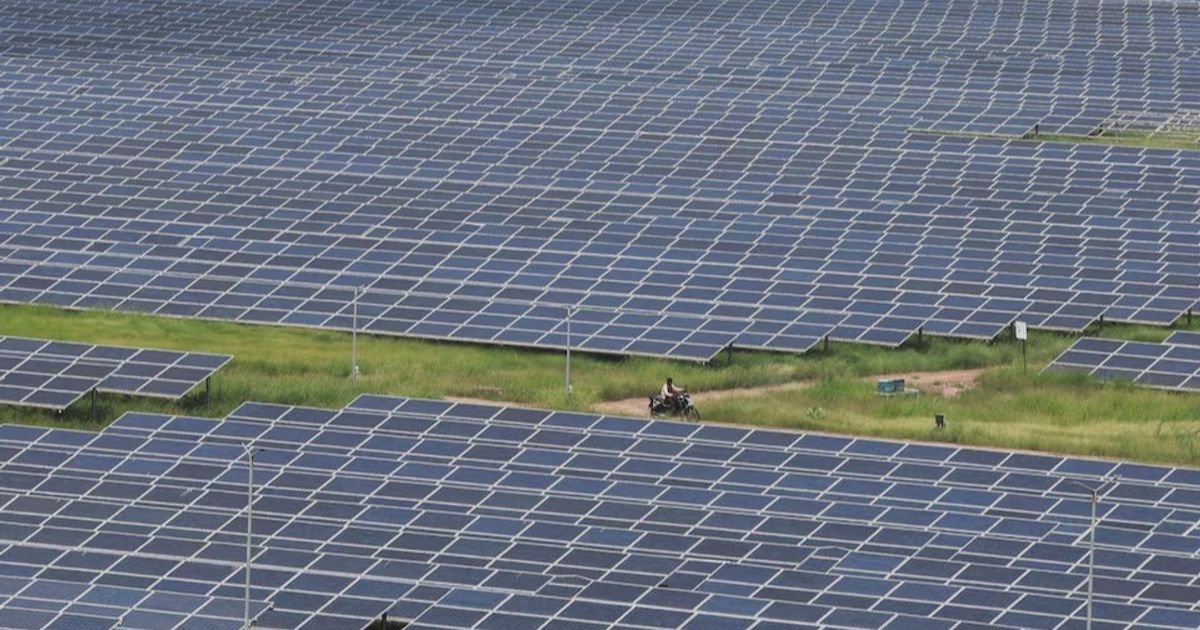
A report issued by organizations concerned with renewable energy on Monday stated that the world needs to increase the deployment of renewable energy by more than 200% to meet a climate commitment by 2030, despite the sector recording an unprecedented level last year.
More than 100 countries agreed during the United Nations Climate Change Conference "COP 28," hosted in Dubai in 2023, to triple renewable energy capacity by 2030.
The world added just over 690 gigawatts of new renewable energy capacity in 2025.
The report issued by the International Renewable Energy Agency, the presidency of "COP 31," and the Global Renewable Energy Alliance indicated that there is still a need to increase the pace of expansion to about 1200 gigawatts annually on average until 2030, in order to meet the global commitment to triple renewable energy capacities.
The total installed renewable energy capacity globally reached 5.15 terawatts by the end of 2025, which is still less than half of the target of 11.2 terawatts needed to fulfill this commitment.
Energy efficiency improvement efforts remain below expectations, with energy intensity improving by about 2% in 2025, which is less than the required annual rate of 4% to meet efficiency doubling commitments.
The report indicated that investment in electricity networks will need to average about one trillion dollars annually during the period from 2026 to 2030, compared to 525 billion dollars in 2025.
Negotiations at the upcoming United Nations Climate Change Conference, scheduled to be held in Turkey next November, are expected to focus on expanding the use of electricity across various sectors and pushing towards a new goal of having electricity cover 35% of total final energy consumption worldwide by 2035.
Last year, the International Energy Agency lowered its global renewable energy growth forecasts for 2030 by 248 gigawatts from its 2024 projections, citing weakened expectations in the United States and China, even as solar energy continues to achieve record increases.
The agency's data projected that global renewable energy capacity will rise by 4600 gigawatts by 2030, down from the 5500 gigawatts forecast in 2024.
Solar energy represents about 80% of the increase.
Francesco La Camera, the Director-General of the International Renewable Energy Agency, stated that global conflicts underscore the importance of accelerating the transition to a 'new decentralized energy system.'
The reduction in forecasts is primarily attributed to the early phase-out of federal tax incentives in the United States and other regulatory changes, which led to the International Energy Agency's growth projections for the U.S. being cut by nearly 50%, while China's shift from fixed tariffs to competitive auctions is putting pressure on project economics.
Stronger forecasts in other regions partially compensate for this reduction.
India is expected to become the second-largest growth market after China, comfortably on track to achieve its 2030 target, supported by expanded auctions, faster permitting, and a boom in rooftop solar energy.
Source: Ofoq News
Suggested
Read also
 Politics
Tripartite Meeting Between Egypt, Chad, and Libya Discusses Security in the Sahel and Sahara Region
 Politics
United States.. Woman Arrested on Suspicion of "Espionage for China"
 Politics