Iran Enters a "Difficult Phase" with Increasing "Economic Pain" and Stalled Negotiations
Economic pressures on Iran have escalated as the war enters its seventh month, with inflation continuing to rise to nearly 90% alongside a decline in the currency value, amid a suffocating American blockade preventing the export of Iranian crude oil, while oil continues to flow through the Strait of Hormuz, with Tehran losing its grip on the strait despite its attacks on navigation in the waterway.
Ofoq News
·5 minutes read
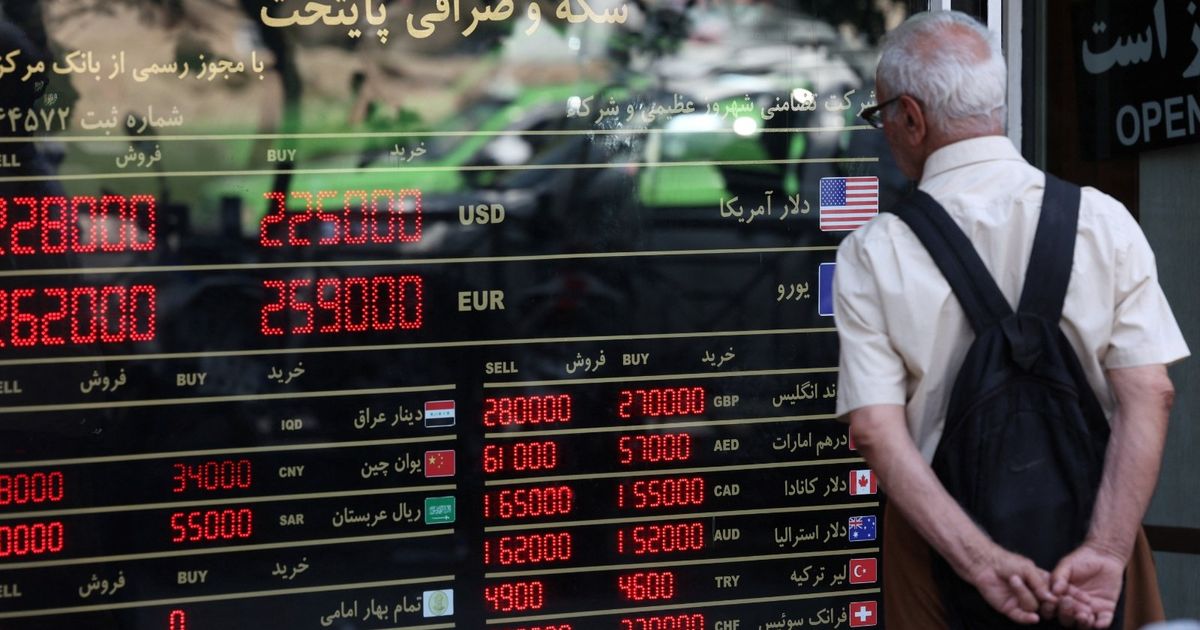
Economic pressures on Iran have intensified as the war enters its seventh month, with inflation continuing to rise to nearly 90% alongside a decline in the currency's value, amid a tight American blockade that prevents the export of Iranian crude oil, while oil continues to flow through the Strait of Hormuz, despite Tehran losing its grip on the strait, despite its attacks on navigation in the waterway.
This combination creates severe pressure even on a regime accustomed to sanctions and economic hardships, while diplomatic efforts with Washington to reach an agreement remain stagnant, according to Bloomberg.
These pressures are significant as they may force Iran to choose between making concessions in an attempt to revive peace talks or escalating a conflict that is already damaging its economy.
Iran's loss of some influence in the strait comes at a time when it is facing a deteriorating economic situation at home, as rising inflation erodes the ability of ordinary Iranians to afford living costs, with the rial losing about 25% of its value against the dollar over the past two months, making imported goods more expensive.
The selling price of the dollar on Saturday reached about 2.688 million rials, up from 2.632 million rials on Friday, while the website AlanChand.com showed that the dollar recorded about 2.695 million rials.
U.S. President Donald Trump is also facing a dilemma, as oil prices approach $100 a barrel, while high fuel prices are harming American consumers ahead of the midterm elections scheduled for November, and internal pressures on Trump may be part of Tehran's calculations.
The statements of the Secretary of the Supreme National Security Council of Iran, Mohsen Rezaei, confirmed the existence of significant internal pressures, as he said on Saturday that the country is going through one of its "most difficult phases," emphasizing the importance of coordinating efforts among various institutions and supporting the government in managing the current situation.
Rezaei pointed to the course of negotiations, affirming Tehran's "seriousness" in continuing them, adding that the Supreme National Security Council is "ready to provide whatever support and cooperation is necessary in economic files to help manage the current circumstances."
An Iranian official in Tehran told Bloomberg, speaking on condition of anonymity to speak freely, that the economic situation in Iran is "extremely painful, but the country is adapting to it."
He added that Tehran is preparing for a new American bombing campaign, which could be larger than the previous one, but it "has the capacity to respond," according to him.
Since the beginning of the war, Iran's greatest source of influence has been its ability to effectively close the Strait of Hormuz, and the disruption of navigation there has led to rising oil and natural gas prices and increased global inflation, imposing a political cost on Trump domestically.
However, Iran's grip on the waterway and its ability to restrict oil exports through it are weakening, with JP Morgan estimating that crude oil shipments from the Middle East have recovered to 17.5 million barrels per day, or 98% of pre-war levels.
Nevertheless, there is still debate about whether Iran still holds the upper hand in controlling the maritime corridor. A senior defense official in the region stated that Iran still retains a significant degree of control over the strait. In contrast, another senior official in the energy sector emphasized that Tehran's grip is 'loosening, despite repeated attacks on ships.'
Arman Mahmoudian, a researcher at the University of South Florida, told Bloomberg that Iran's influence over the Strait of Hormuz has 'changed.'
He added: 'The gradual increase in oil shipments indicates that the United States is finding ways to reassure tanker operators about the safety of transit. At the same time, I believe shipping companies are gradually moving beyond the initial panic phase and starting to accept instability in the Strait of Hormuz as part of the new reality.'
Iranian officials see little chance of reaching a peace agreement before the U.S. midterm elections on November 3, and they believe there is a significant likelihood of escalation afterward. The Iranian Revolutionary Guard said on Friday that it is prepared to deliver a "swift and painful response" to any U.S. or Israeli aggression.
Anisa Basiri Tabrizi, a fellow at Chatham House, told Bloomberg, "Both sides generally want to reach an agreement, but they are moving further apart instead of closer together."
She added that with oil exports from the region rising, "the United States feels stronger in the Strait of Hormuz compared to a few weeks ago."
In September, Iran did not ship any crude oil on tankers, according to preliminary estimates from Bloomberg. This was the first time this has happened since the war began, highlighting the increasing effectiveness of the U.S. blockade on its ports.
U.S. Treasury Secretary Scott Pisent said on Friday in an interview with Axios, "For the first time in history, since they started pumping oil, they will have no oil on the water this week." He added, "They will have no revenue."
Iran continues to supply some Chinese refineries with oil from stocks that were shipped earlier and are located in Asia. However, these stocks may soon run out, further reducing the main source of government revenue.
Tehran has redirected a larger portion of its trade through land borders and the Caspian Sea, but these routes cannot fully compensate for the pressures. Official media reported an increase in truck traffic and delays at crossings with Turkey and Pakistan in September, while the Caspian Sea provides Tehran with a maritime outlet to its ally Russia.
Washington is expanding its economic pressures. On October 1, it imposed sanctions on Iran's largest automotive companies and several railway companies, and it has begun measures targeting the aviation sector that are bearing fruit, according to Bloomberg.
Trump has shown a renewed inclination towards military escalation as the midterm elections approach. He stated this week that more severe strikes against Iran are "possible" after the November 3 elections, while the Department of Defense announced the deployment of the aircraft carrier USS Theodore Roosevelt, along with additional forces, to the Middle East horizon.
Trump has repeatedly threatened to launch attacks that he ultimately did not carry out. In July, he pledged to strike bridges and power stations in response to attacks on navigation, before backing down at the last moment. However, the approach of the midterm elections and voter dissatisfaction with his handling of the war provides him with an incentive to break the stalemate.
Source: Ofoq News
Suggested
Read also
 Politics
Tripartite Meeting Between Egypt, Chad, and Libya Discusses Security in the Sahel and Sahara Region
 Politics
United States.. Woman Arrested on Suspicion of "Espionage for China"
 Politics