Iranian Official: The Economic Situation is Painful.. and We are Preparing for a Possible American Bombing Campaign
Economic pressures on Iran are escalating after 7 months of war, with inflation nearing 90%, while the American maritime blockade chokes its oil exports and Tehran's grip on the Strait of Hormuz weakens.
Ofoq News
·5 minutes read
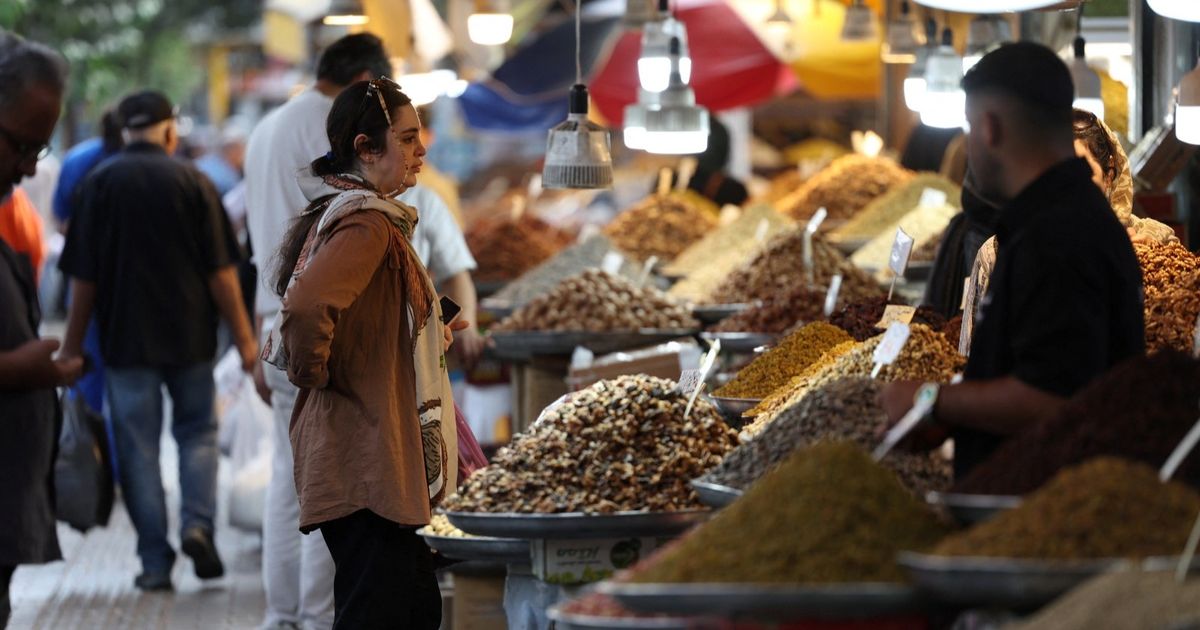
Economic pressures on Iran are escalating after 7 months of war, with inflation nearing 90%, while the U.S. naval blockade chokes its oil exports and Tehran's grip on the Strait of Hormuz weakens.
A source in Tehran told Bloomberg that the economic situation in Iran is extremely painful, but the country is adapting to it.
He added that Iran is preparing for a new U.S. bombing campaign that could be larger than the previous one, but it has the capability to respond.
U.S. President Donald Trump has sent another aircraft carrier and 10,000 troops to the region, while the diplomatic path remains blocked.
The U.S. pressures are significant as they may force Iran to choose between making concessions in an attempt to revive peace talks or escalating a conflict that is already damaging its economy.
Iranian officials believe that the chances of reaching a peace agreement before the U.S. midterm elections on November 3 are limited, and they think there is a significant likelihood of escalation afterward, according to Bloomberg.
The Iranian Revolutionary Guard stated on Friday that it is prepared to deliver an "immediate, painful, and regretful response" to any aggression from the United States or Israel.
Iran's biggest leverage throughout the war, which began in late February with a U.S. and Israeli bombing campaign, was its ability to effectively close the Strait of Hormuz. This waterway is a vital artery for the transport of energy and other goods.
The disruption of shipping has led to rising oil and natural gas prices and increased global inflation, imposing a domestic political cost on Trump.
However, Iran's grip on the waterway and its ability to restrict oil exports from Gulf Arab states are both declining.
According to tanker tracking data collected by Bloomberg, oil exports from the Gulf through the Strait of Hormuz increased in September.
J.P. Morgan estimates that crude oil shipments from the Middle East have recovered to 17.5 million barrels per day, which is equivalent to 98% of pre-war levels.
However, there is still debate over whether Iran maintains the upper hand in this vital maritime corridor.
Bloomberg quoted a senior defense official in the region stating that Iran still retains a significant degree of control over the strait, while another official in the energy sector emphasized that Tehran's grip is waning despite repeated targeting of vessels.
A crude oil tanker was hit by a projectile early Saturday in the Strait of Hormuz, about 4 miles off the coast of Oman, according to the UK Maritime Trade Operations.
Iran's influence in the Strait of Hormuz is declining concurrently with a very difficult economic situation at home.
The rise in inflation is eroding the purchasing power of Iranians, while the local currency has lost about 25% of its value against the dollar in the past two months, making imported goods more expensive.
In September, Iran did not ship any crude oil on tankers, according to preliminary estimates by Bloomberg. This was the first time this has happened since the beginning of the war, highlighting the increasing effectiveness of the U.S. blockade imposed on its ports.
Iran continues to supply some Chinese refineries with oil from previously shipped stocks located in Asia, but these stocks may soon run out, leading to further declines in one of the government's main sources of revenue.
Tehran has redirected more of its trade through land borders and the Caspian Sea, but these routes cannot fully compensate for the pressures.
Official media reported an increase in truck traffic and delays at border crossings with Turkey and Pakistan during September, while the Caspian Sea provides Tehran with a maritime outlet to its ally Russia.
Washington is also working to expand its economic pressures on Iran; on October 1, it imposed sanctions on the largest automotive companies and several railway companies.
According to Bloomberg, the previous measures imposed on the Iranian aviation sector are beginning to bear fruit. Iranian flights to the UAE stopped in late September. Flights to Iraq, Turkey, and Oman were also disrupted.
The economic burden poses a particular risk to Iran, as the war broke out just weeks after widespread protests across the country over rising prices and currency collapse. The government is now trying to ease pressures on its budget without igniting new unrest.
In September, officials reduced gasoline subsidies, a measure that previously led to deadly protests in 2019. This week, the Tehran municipality fixed the prices of 12 essential food items for six months through its network of markets.
Trump has once again shown a willingness to proceed with a policy of military escalation as the midterm elections approach.
Trump stated that delivering harsher strikes against Iran after the November 3 vote is "possible," while the Pentagon has sent the aircraft carrier "Theodore Roosevelt," along with about 10,000 additional troops to the Middle East.
With the arrival of "Theodore Roosevelt," the number of American aircraft carriers in the region will rise to 3, a buildup not seen since the initial phase of the Iraq invasion in 2003.
However, it is unclear whether one of the other two aircraft carriers will leave the region once "Theodore Roosevelt" arrives in the coming weeks.
Trump has previously threatened to carry out attacks, but he has ultimately not executed them.
In July, he pledged to strike bridges and power stations in response to attacks targeting navigation, before backing down at the last moment.
However, the approach of the midterm elections and voter dissatisfaction with his management of the war gives him an incentive to break the stalemate.
Iran may see itself as able to withstand the pressures until Trump backs down.
Jonathan Panikoff, former deputy national intelligence officer for the Near East at the U.S. National Intelligence Council, said: "There are still questions about how willing the United States is to continue this strategy and effort in the long term, given the real pressures it places on U.S. naval forces."
He added in statements to Bloomberg that "hardliners in Iran are betting on their ability to withstand more internal pressures and wait for U.S. engagement in the region to end."
Source: Ofoq News
Suggested
Read also
 Politics
Tripartite Meeting Between Egypt, Chad, and Libya Discusses Security in the Sahel and Sahara Region
 Politics
United States.. Woman Arrested on Suspicion of "Espionage for China"
 Politics